AOYE Joins Establishment of Egypt’s National Team to Combat Illegal Bird Hunting
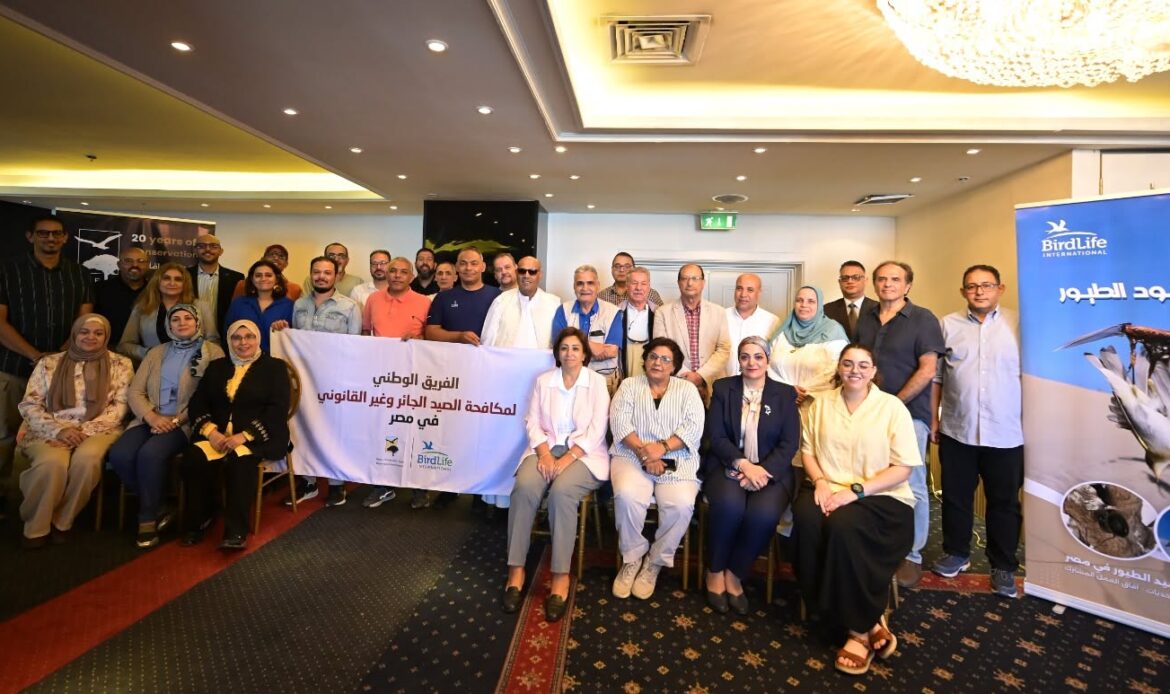
The Arab Office for Youth and Environment (AOYE) has joined Egypt’s newly established National Team to Combat Excessive and Illegal Bird Hunting, as part of efforts to strengthen national coordination in addressing illegal bird hunting and protecting biodiversity.
AOYE participated as a member of the National Team in its inaugural meeting, held in Alexandria on 17 September 2026 at the initiative of the Nature Conservation Egypt (NCE). The initiative aims to establish a national framework bringing together stakeholders involved in bird and biodiversity conservation.
AOYE’s participation reflects the importance of consolidating national efforts and strengthening partnerships among civil society organizations, relevant authorities, experts, and local communities. The initiative seeks to move beyond fragmented responses to illegal hunting towards an integrated approach combining legislation and enforcement, scientific research, awareness raising, economic empowerment, and community participation.
National Roadmap for 2026–2030
The inaugural meeting addressed several issues related to establishing the institutional and organizational framework of the National Team, including its terms of reference, members’ roles and responsibilities, coordination mechanisms, and a proposed National Roadmap for 2026–2030.
The roadmap incorporates several interconnected areas of action, including community awareness and engagement; financing and partnership development; legislation, enforcement and compliance mechanisms; scientific research, monitoring and data exchange; and the economic and social dimensions associated with hunting.
This comprehensive framework reflects recognition that illegal and excessive bird hunting is not solely an environmental issue, but also a social and economic challenge requiring coordinated and multidimensional responses.
Leadership and Specialized Committees Established
The National Team completed its leadership structure with the election of Eng. Waheed Salama as its Executive President.
Specialized committees were also established, with coordinators appointed as follows:
- Dr. Maha Abdel Nasser – Coordinator of the Committee on Reviewing Legislation, Policies, Implementation and Compliance Mechanisms.
- Dr. Basma Sheta – Coordinator of the Scientific Research and Monitoring Committee.
- Dr. Ekramy El-Abasiry – Coordinator of the Economic Alternatives and Ecotourism Committee.
- Sayed Mohamed El-Sayed – Coordinator of the Financing, Institutional Empowerment and Capacity-Building Committee.
- Dr. Mahmoud Bakr – Coordinator of the Awareness, Media, Ethical and Cultural Values Committee.
The establishment of these committees represents an important organizational step towards systematic action by distributing the different dimensions of the issue across specialized areas while maintaining coordination and integration under the umbrella of the National Team. This structure is expected to strengthen the Team’s ability to develop practical policies and interventions at both local and national levels.
Community Engagement and Sustainable Alternatives
Discussions also explored practical proposals to strengthen community participation and promote sustainable changes in hunting-related practices.
Among the proposals were the development of awareness programmes targeting different groups, involving local communities in designing and implementing solutions, and exploring economic alternatives suited to the social and economic characteristics of different areas.
Participants also discussed developing a voluntary pledge to reduce the illegal hunting of migratory birds, accompanied by clear monitoring and evaluation mechanisms. The proposed initiative could create opportunities for broader participation by hunters, local communities, and relevant stakeholders in bird conservation efforts.
Field Visit to Burullus
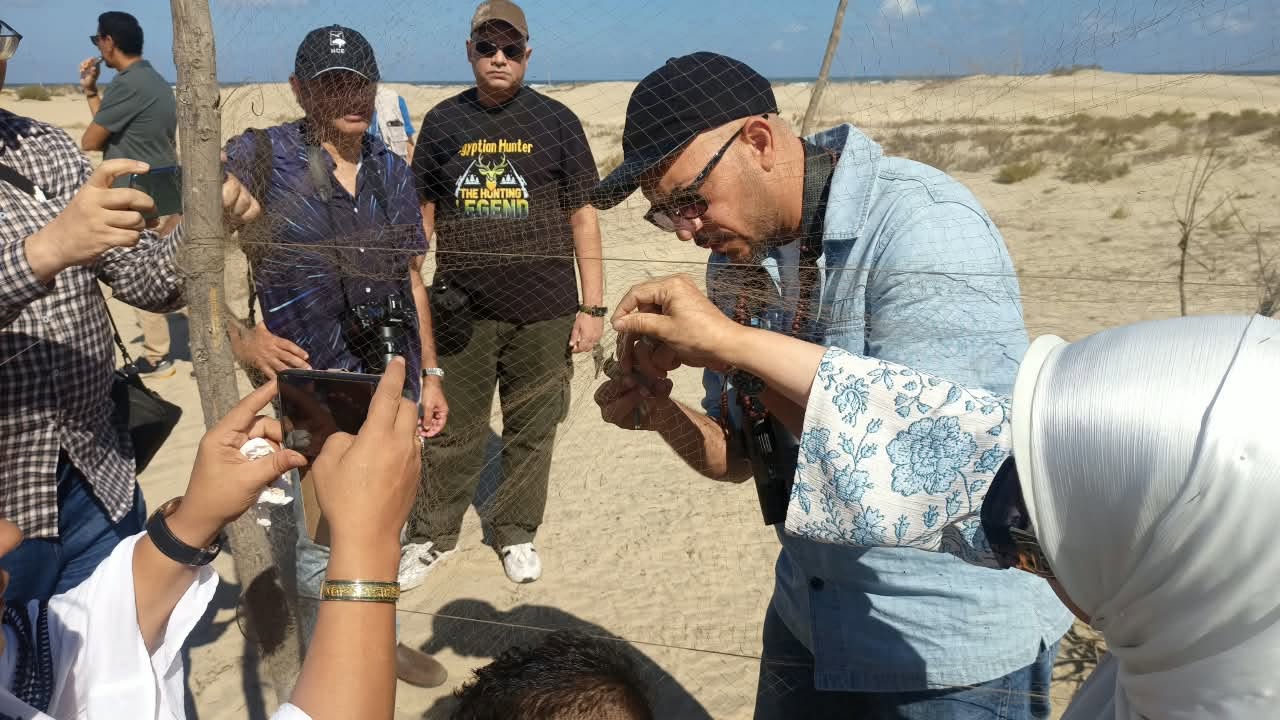
On the day following the inaugural meeting, National Team members conducted a field visit to the Burullus area in Kafr El-Sheikh Governorate to gain first-hand insight into hunting locations and practices.
The visit provided an opportunity to meet hunters and better understand the circumstances and motivations associated with hunting practices, helping to inform interventions based on a realistic understanding of local conditions.
Participants observed a number of birds being held in captivity and reviewed efforts to rescue and release some of them. The visit also provided insights into part of the bird-trading chain through a visit to a local trader.
The field mission highlighted the complexity of the issue and demonstrated that excessive and illegal hunting cannot be addressed solely through environmental measures or law enforcement. It is linked to a wider network of economic and social factors, patterns of demand and consumption, hunters’ livelihoods, bird-trading chains, and the growing role of social media platforms in promoting and disseminating hunting-related content.
AOYE’s participation in the National Team underscores the importance of broadening national partnerships to combat illegal hunting and connecting institutional action with scientific research, monitoring, media, awareness raising, and field engagement.
It also highlights the need to place local communities at the heart of designing and implementing solutions. Such an approach can strengthen efforts to protect migratory birds and biodiversity in Egypt, while developing solutions that respond to the realities and needs of local communities and increase the prospects for achieving sustainable, long-term results.