Arab Office for Youth and Environment and Egyptian Sustainable Development Forum in a Joint Statement: Protecting Trees is a National Commitment Linked to Quality of Life, and the “100 Million Trees” Initiative Is a Key Pillar in Addressing Climate Change
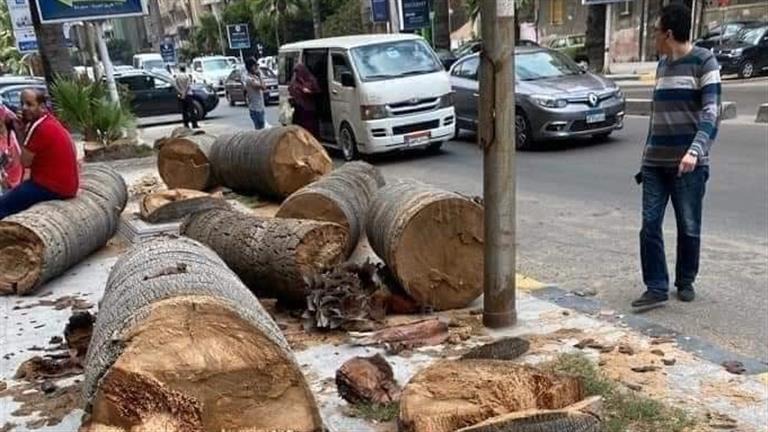
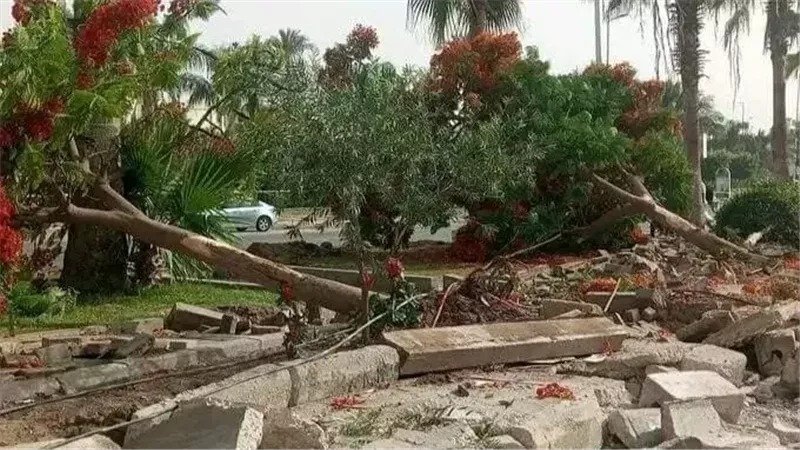
The Arab Office for Youth and Environment (AOYE) and the Egyptian Sustainable Development Forum (ESDF) have issued a joint statement expressing their rejection and concern over the cutting of trees and removal of green spaces by some executive authorities without adherence to the necessary technical and environmental regulations and justifications. They stressed that protecting trees is not an environmental luxury, but rather a national commitment directly linked to public health, quality of life, and efforts to address the impacts of climate change.
In their joint statement, AOYE and ESDF affirmed that such practices are inconsistent with national policy directions and with the outcomes of the National Dialogue on Tree Conservation and the Expansion of Green Spaces, held in June 2024. The dialogue emphasized the need to protect trees and stipulated that they should only be removed in cases of extreme necessity and with the approval of the Prime Minister. A decision was subsequently issued by the Cabinet in this regard, establishing a compensation mechanism that requires the planting of ten trees for every tree removed.
The statement called on all executive authorities to comply with the agreed measures and to refrain from treating trees as obstacles to development projects. Instead, trees should be regarded as an integral component of sustainable urban planning and development. It also called for any activities related to afforestation—whether the planting of new trees or the removal of existing ones—to be referred to the Scientific Advisory Committee for Supporting Afforestation, established under the auspices of the Ministry of Environment as one of the outcomes of the National Dialogue.
Lack of Integration Between Local Development and Environmental Protection
The statement noted that AOYE and ESDF had expected the integration of the Ministry of Environment with the Ministry of Local Development to contribute to stronger tree protection, increased green spaces across neighborhoods and cities, and greater incorporation of environmental considerations into local planning and development processes.
It stressed that the success of such integration should be measured by its ability to achieve genuine coherence between local development and environmental conservation, ensuring that tree protection and the expansion of green spaces become integral components of neighborhood development policies and efforts to improve citizens’ quality of life.
The statement further emphasized that trees are not an obstacle to development; rather, they are an essential component of it. Tree removal should therefore remain an exception dictated by necessity rather than becoming a routine practice in development projects.
It also highlighted the Presidential “100 Million Trees” Initiative as a key pillar of Egypt’s national efforts to address climate change, given its integrated environmental, social, and economic dimensions. Environmentally, the initiative contributes to reducing emissions and improving air quality. Socially, it aims to expand green spaces, improve public health, and enhance quality of life. Economically, it creates opportunities to benefit from timber and fruit production while generating additional employment opportunities.
In this context, the statement stressed that achieving the initiative’s objectives requires more than simply planting trees. It also requires ensuring their survival and long-term sustainability through the selection of suitable species, scientifically informed planning, adequate irrigation and maintenance, robust monitoring and evaluation mechanisms, and clearly defined institutional responsibility for their care and protection.
Specific Circumstances in Which Tree Removal May Be Permitted
The statement clarified that protecting trees does not mean prohibiting their removal under all circumstances. Tree removal may be permitted in specific cases of necessity, including when a tree is diseased or infected and its continued presence poses a risk to other trees or to the surrounding environment, or when it presents an imminent threat to citizens’ lives, safety, or property, based on a technical assessment conducted by the competent authorities.
Tree removal may also be permitted when preserving the tree is demonstrably impossible and it constitutes a genuine obstacle to the implementation of an urban development or essential public infrastructure project. However, such cases must be supported by a clear technical and environmental assessment, and alternatives that would allow the tree to be preserved should first be thoroughly considered.
The statement emphasized that this third circumstance must not become an open-ended justification for tree removal. It called for urban development projects requiring the removal of trees to be based on genuine community dialogue involving residents, civil society organizations, and relevant authorities, while ensuring the planting of appropriate replacement trees and adequate compensation for any loss of green cover.
Sustainable Development Does Not Mean Removing Trees
AOYE and ESDF called for trees and green spaces to be integrated into the design and implementation of urban development projects from the earliest planning stages, rather than being treated as elements that can simply be removed during implementation.
They also called for the introduction of transparent institutional mechanisms for managing trees, including prior technical and environmental assessments, proper documentation of tree-removal decisions and their justifications, public access to relevant information, and enhanced community participation. Such measures are essential to achieving an appropriate balance between development needs and citizens’ right to a healthy and safe environment.
The statement concluded by reaffirming that protecting trees and expanding green spaces represent a long-term investment in human health, economic well-being, and climate resilience. Translating the outcomes of the National Dialogue and national strategies into tangible results requires clear and effective implementation commitments, rather than relying solely on announced policies and plans.
The Arab Office for Youth and Environment (AOYE)
Egyptian Sustainable Development Forum (ESDF)
Cairo – September 2026