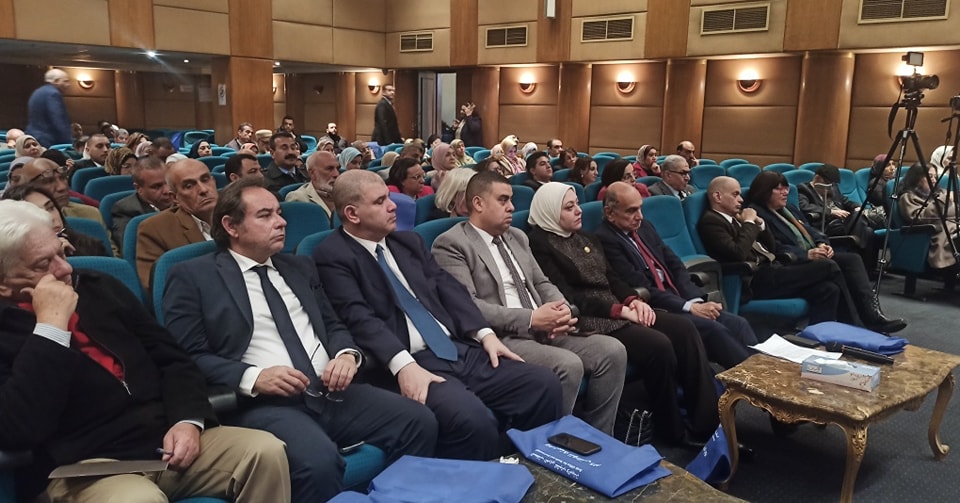
January 27 of each year represents a pivotal national milestone in Egypt’s environmental action journey, as it marks the issuance of the country’s first Environmental Protection Law. Over time, this occasion has gradually evolved into a national platform for dialogue among the state, civil society, the private sector, youth, and the scientific community on the future of the environment in Egypt.
In this context and in full partnership with the Ministry of Environment, the Arab Office for Youth and Environment is organizing the celebrations and activities of National Environment Day 2026 under the theme: “Sustainable Blue Economy and Nature-Based Solutions: Renewable Energy and Supporting the Path of Sustainability,” under the patronage of Dr. Manal Awad, Minister of Local Development and Acting Minister of Environment.
The selection of the theme “Sustainable Blue Economy and Nature-Based Solutions” for this year’s National Environment Day carries particular significance considering Egypt’s successful hosting of the 24th Conference of the Parties to the Barcelona Convention for the Protection of the Mediterranean Sea (COP-24), held in Cairo in early December 2025. The conference addressed a range of key issues and adopted the Mediterranean Strategy for Sustainable Development, along with several regional initiatives, including the “TeraMed” Initiative. This initiative represents a practical model for addressing climate change, aiming to triple the currently installed renewable energy capacity on national grids to reach 1 terawatt across the Mediterranean region. TeraMed is also considered one of the nature-based solutions that support global efforts to mitigate the impacts of climate change.
National Environment Day serves as a comprehensive framework for promoting and embedding a culture of sustainability within society by building genuine partnerships among government institutions, civil society, the private sector, universities, research centers, media, and youth. It represents an advanced model of national partnership that goes beyond ceremonial activities toward joint action and integrated planning. This approach contributes to changing consumption and production patterns, encouraging positive environmental behaviors, and safeguarding the right of future generations to a healthy and balanced environment.
The National Environment Day celebrations include an expanded program of activities at both central and local levels, in coordination with Local Sustainable Development Forums across various governorates. These activities include dialogue sessions and workshops that bring together experts in environment and sustainable development with youth, civil society representatives, and media professionals. The aim is to exchange perspectives on expanding renewable energy use and applying nature-based solutions in agriculture, water management, waste management, and biodiversity conservation, as well as enhancing land-use efficiency and supporting sustainable livelihoods in rural communities.
The program will also highlight the project on mitigating drought impacts in the Delta governorates, which seeks to strengthen the resilience of agricultural and ecological systems to water scarcity, improve food security, and support small-scale farmers through climate-smart agricultural practices.