The Arab Office Supports Strengthening Partnerships with the Private Sector to Address the Development Financing Gap
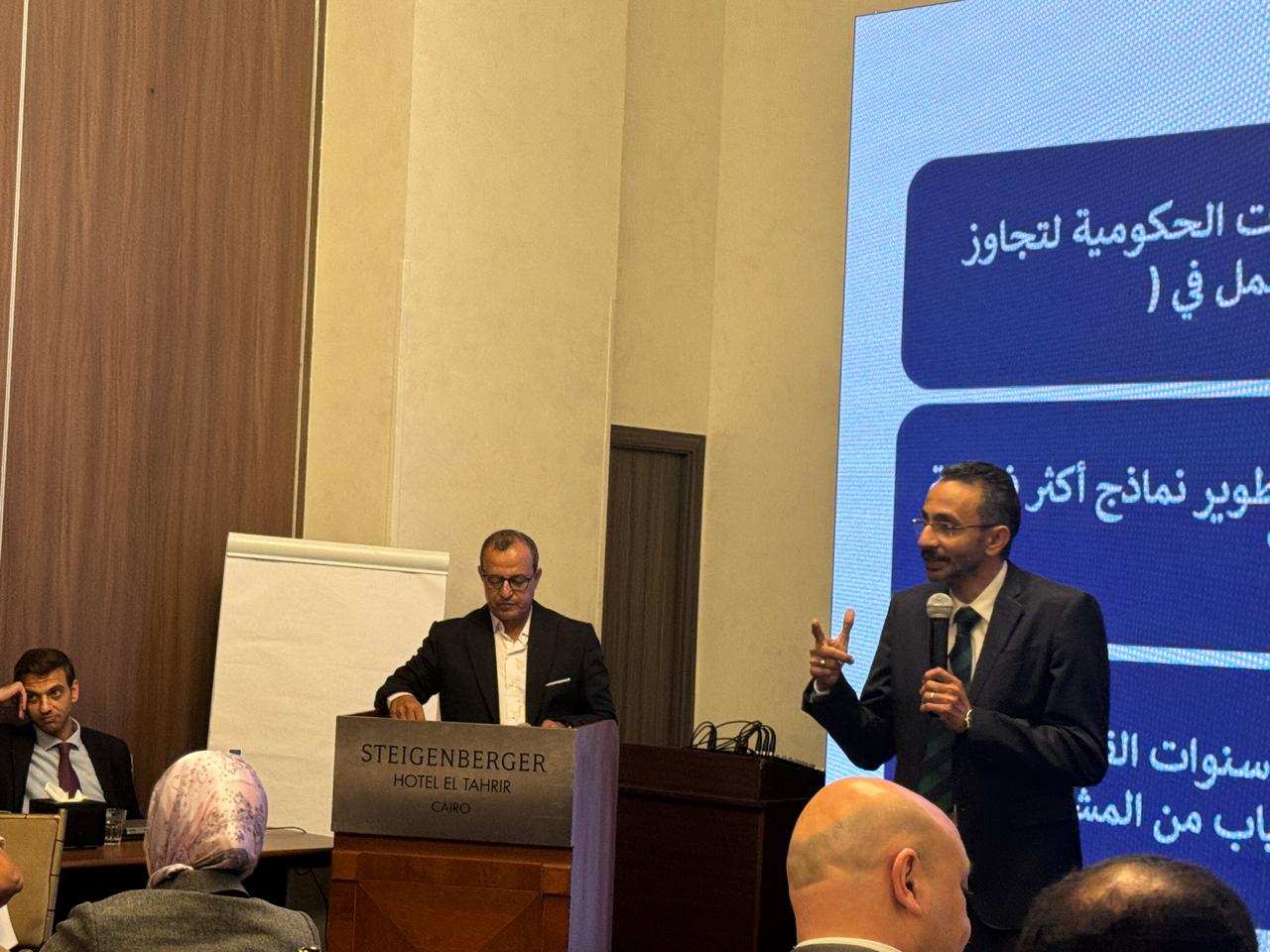
The Arab Office for Youth and Environment (AOYE) participated in the second roundtable held under the theme “Enhancing Partnerships between the Private Sector and Civil Society to Achieve Sustainable Development,” hosted by CARE Egypt and the Sawiris Foundation for Social Development during a full-day event in Cairo.
The second roundtable is convened at a critical moment, as the region is witnessing a marked decline in financial flows directed toward development and humanitarian action. This decline has posed direct challenges to essential services and social protection systems in several countries, including Egypt, Jordan, Lebanon, Syria and Yemen.
The sessions focused on exploring new models of cooperation between the private sector and civil society organizations, particularly considering an estimated USD 93 million financing gap compared to the previous two years. This shortfall has resulted in the suspension or freezing of approximately 120 development projects and has placed more than 300 civil society organizations at risk of operational disruption.
In this context, AOYE emphasized that the current phase requires moving beyond traditional mechanisms of engagement toward deeper and more innovative partnerships that leverage the capacities and expertise of the private sector, alongside civil society’s close connection to the needs of vulnerable communities.
The roundtable also showcased several successful experiences as replicable models, including the agricultural mechanization project in Al-Galila Village, Beni Suef Governorate, which transformed agricultural practices through the introduction of modern equipment managed by a group of women as the nucleus of a sustainable economic venture. The project serves farmers, generates stable income for the local community and exemplifies the type of partnerships needed at this stage, where economic interests intersect with tangible social impact.
Participants further discussed the principles that should govern future partnerships in line with Egypt Vision 2030, foremost among them transparency, mutual accountability, localization of development through the engagement of local actors and innovation in designing scalable initiatives. The experience of the Sawiris Foundation received extensive attention as a model of evidence-based philanthropy and impact measurement, with a strong emphasis on assessing success based on improvements in people’s lives and community well-being rather than merely the number of implemented projects.
Participants also noted that despite the availability of substantial financial resources that could be directed toward development action, several structural barriers continue to limit their effective deployment. These include banks’ compliance concerns, the challenge of aligning civil society language with private sector concepts and the absence of clear tools for measuring social return on investment (SROI).
In this regard, the Arab Office for Youth and Environment called for enhancing governance and transparency systems within civil society organizations and for strengthening their impact-measurement capacities to facilitate trust-building and unlock broader partnerships with the private sector. Such efforts are essential to narrow the financing gap and accelerate progress toward the Sustainable Development Goals (SDGs).
At the conclusion of the roundtable, participants agreed that the current financing crisis, despite its severity, represents an opportunity to reshape cooperation models in Egypt and the region. They affirmed that tripartite partnerships involving government, the private sector and civil society constitute the most viable pathway toward delivering sustainable and effective solutions.